The Cloud Jargon Buster: Explaining Regions, AZs, and Edge Locations in Plain English
The world of cloud computing comes with its own set of terms and acronyms. It can feel like learning a new language! Today, we’re going to tackle three fundamental concepts in AWS (Amazon Web Services) that you’ll hear a lot: Regions, Availability Zones (AZs), and Edge Locations. We’ll break them down in simple terms so you can understand what they are and why they matter.
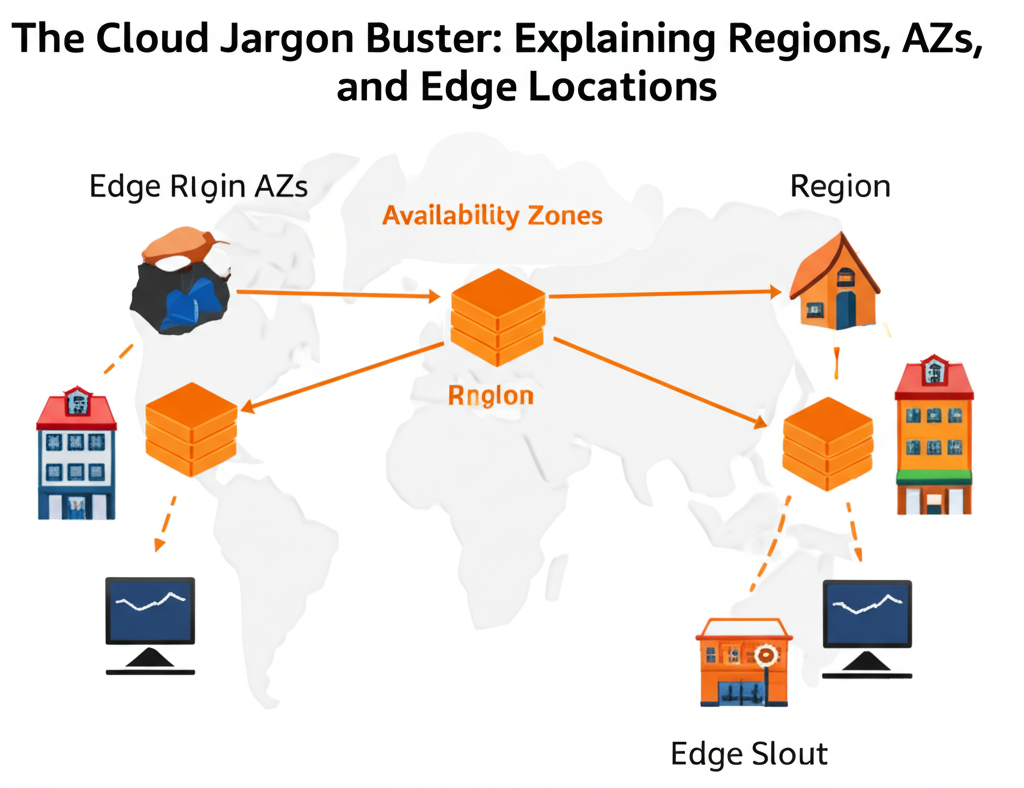
Imagine the World as a Set of Neighborhoods (Regions)
Think of AWS Regions as major geographical areas around the world. These are like big neighborhoods or cities. AWS has many Regions across the globe, like North America, Europe, Asia, and Australia.
- Why do they exist? Regions allow you to choose a location that’s geographically closer to your users. This can lead to faster website loading times and a better experience for them. Also, some regulations might require your data to be stored within a specific country or region.
Inside a Neighborhood: Availability Zones (AZs)
Now, let’s zoom into one of those big neighborhoods (a Region). Inside each Region, AWS has multiple Availability Zones (AZs). Think of AZs as different buildings or houses within that neighborhood.
- What are they? Each AZ is a separate and independent data center. They are located far enough apart to be protected from most single points of failure, like power outages or natural disasters in one location. However, they are also close enough to each other for fast, low-latency connections.
- Why are they important? By deploying your applications and data across multiple AZs within a Region, you can make your systems highly available and fault-tolerant. If one AZ experiences an issue, your application can continue running in the other AZs.
The Corner Stores: Edge Locations
Finally, let’s think about those small corner stores or local shops in various neighborhoods around the world. These represent AWS Edge Locations.
- What are they? Edge Locations are a network of globally distributed data centers that are designed to deliver content to your users with the lowest possible latency (delay).
- How do they work? When a user tries to access your content (like images, videos, or web pages), AWS can serve that content from the nearest Edge Location instead of going all the way back to your main Region. This makes things much faster for the user.
- What’s their main job? Edge Locations are primarily used by AWS services like CloudFront (a content delivery network or CDN) to cache and deliver content quickly.
Putting It All Together
Think of it like this:
- Region: A large geographical area (like a city).
- Availability Zone (AZ): A separate data center within a Region (like a building in the city), designed for fault isolation.
- Edge Location: A globally distributed network of smaller data centers (like corner stores) that cache content for faster delivery to users.
Understanding these three concepts is crucial for building reliable, scalable, and performant applications on AWS. By strategically choosing your Regions and deploying across multiple AZs, you can ensure your services stay up and running. And by leveraging Edge Locations, you can provide a faster and better experience for your users no matter where they are in the world.